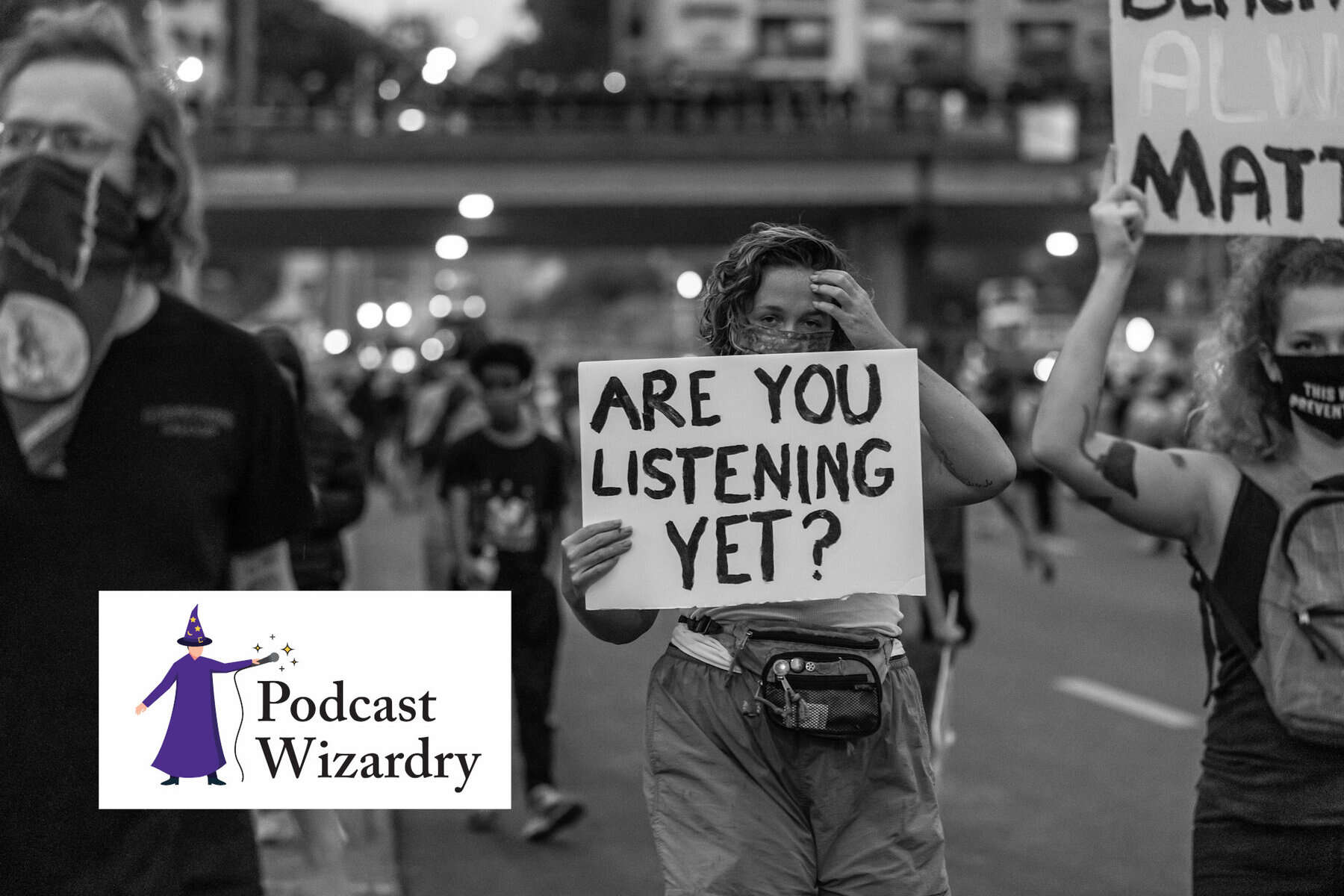
Not every podcast is about elections, policy, or political theory. Some are about cars. Or fitness. Or books. Or creativity. Or gaming. Or entrepreneurship. So when the political climate feels unstable, or even actively harmful, it raises an uncomfortable question:
If my show isn’t political, do I stay silent? Or do I use my platform to push back?
There isn’t a universal answer. But there is a strategic one.
First: Decide Whether This Is About Politics or Values
Many creators get stuck because they think “protest” means turning their podcast into a partisan commentary show. It doesn’t. Authoritarian behavior, corruption, censorship, attacks on marginalized groups–these are not merely “political topics.” They are value issues. They affect how people live, work, create, and speak. If your podcast has ever expressed values (fairness, creativity, independence, transparency, resilience) you already have a framework.
The question isn’t whether to become political. It’s whether your stated values still mean anything when they’re inconvenient.
You Don’t Have to Rebrand Your Show
If your podcast is about cars, you don’t need to pivot into daily political analysis. If it’s about marketing, you don’t need to start dissecting legislation every week. What you can do is:
- Be clear about the principles you stand for
- Refuse to normalize behavior that contradicts those principles
- Support organizations or communities aligned with your values
You can integrate this without hijacking your format. Some simple things to consider:
- A brief statement at the top of an episode.
- A dedicated episode explaining your stance.
- A resource page linked in your show notes.
- A fundraiser or call to action.
Protest doesn’t require abandoning your niche. It requires clarity.
Understand the Cost
Let’s be honest about something: Speaking up can cost you. You may lose listeners. Sponsors might hesitate. Colleagues may distance themselves. Social media platforms might reduce your reach. Or worse, they may delete your platform altogether.
Before you use your platform to protest, decide whether you’re prepared for that. Not emotionally in the moment, but strategically in advance.
Courage without preparation turns into chaos.
Courage with preparation becomes leadership.
If you’re going to speak, build resilience first:
- Strengthen your email list
- Diversify distribution
- Clarify your audience
- Reduce financial dependence on a single sponsor
Protest is easier when your foundation is stable.
Protest Through Standards, Not Just Statements
One of the most powerful ways to resist bad politics is not through outrage, but through standards:
- Model intellectual honesty.
- Fact-check yourself.
- Avoid sensationalism.
- Correct mistakes publicly.
Authoritarian movements thrive on distortion and emotional manipulation. A podcast that prizes clarity and integrity is already pushing back. Even if your show is about something entirely different, you can reinforce democratic habits:
- Respect for evidence
- Nuanced discussion
- Willingness to change your mind
These behaviors are cultural counterweights to extremism.
Use Your Niche as Leverage
Your audience trusts you for a specific reason. That’s your leverage. If your show is about business, you can talk about how political instability affects entrepreneurship. If your show is about history, you can draw parallels carefully and responsibly. If it’s about health, you can discuss how policy shapes access and outcomes.
You don’t have to leave your lane. You just have to widen it slightly. When protest is connected to your subject matter, it feels thoughtful, genuine, and not performative.
Avoid Performative Outrage
There’s a difference between principled protest and reactive posting. If you’re speaking because you feel pressure to, pause. If you’re speaking because you’ve thought it through and accept the consequences, proceed.
Outrage is cheap. Credibility is not.
Your audience can tell the difference.
Remember What Podcasting Does Best
Podcasting is intimate. It builds trust over time. It rewards depth. If you choose to protest through your platform, do it in a way that reflects those strengths:
- Explain your reasoning calmly
- Invite thoughtful disagreement
- Offer constructive next steps
Don’t shout into the void. Guide a conversation.
How Do You Use a Podcast to Protest?
At the end of the day, this isn’t about algorithms or backlash. It’s about alignment. Can you continue producing your show as it currently exists without feeling like you’re withholding something important?
- If the answer is yes, stay focused and keep serving your audience well.
- If the answer is no, you already know what you need to do.
Using your platform to protest doesn’t mean abandoning your identity as a creator. It means deciding whether your voice exists only when it’s safe, or also when it matters.
Contact The Podcast Wizard
Need a little more guidance? That’s what Podcast Wizardry is here for. Drop us a DM on our LinkedIn page. I’m happy to help you make the most of your production.